
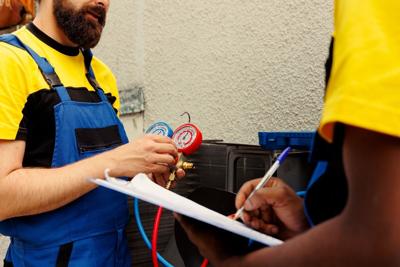

When the heat ramps up, your air conditioner becomes the hardest-working appliance in the house. If it’s blowing warm air, short-cycling, or suddenly refusing to turn on, you’re not alone—those are some of the most common reasons homeowners look for a AC repair company.
This guide breaks down the most common AC problems, what you can safely troubleshoot yourself, and when it’s time to call a licensed technician. We’ll also share maintenance habits that can help your system run better (and often longer).
Common AC Problems Homeowners See Most
1) Dirty or clogged air filter
A clogged filter restricts airflow, forces the system to work harder, and can contribute to coil freeze-ups. Start here—it’s the simplest fix and one of the most overlooked. If you’re unsure how often to replace it, the U.S. Department of Energy recommends checking filters monthly during heavy-use seasons.
2) Frozen evaporator coil
Frozen coils usually point to airflow issues (dirty filter, blocked returns) or low refrigerant. If you see ice on the indoor coil or refrigerant line, turn the system off to let it thaw and address airflow first before restarting.
3) Refrigerant problems (possible leaks)
If your AC runs but never cools properly, low refrigerant may be involved. Refrigerant isn’t “used up”—so low levels typically mean a leak. Because refrigerant handling is regulated and requires proper equipment and certification, this is a professional-only repair.
4) Thermostat or control issues
A failing thermostat can cause short-cycling, inconsistent temperatures, or no cooling call at all. Confirm it’s set to Cool, the fan is on Auto, and the batteries (if applicable) are fresh.
5) Electrical issues (breaker trips, blown fuses)
Repeated breaker trips can signal a deeper electrical or component issue (capacitor, compressor, wiring). Reset once—if it trips again, stop and call a pro.
Signs It’s Time to Schedule AC Repair
Warm air or weak airflow from vents
Odd noises (grinding, squealing, loud buzzing)
Water pooling near the air handler (possible clogged drain line or freeze-up)
High humidity indoors even while the AC is running
Odors (musty can indicate moisture/mold; burning can indicate electrical issues—shut it down)
What You Can Troubleshoot Safely Before Calling a Technician
Check thermostat settings (Cool mode, correct setpoint, fresh batteries).
Replace the air filter and make sure vents/returns aren’t blocked.
Inspect the outdoor condenser and clear leaves/debris around it (give it breathing room).
Check the drain line for visible clogs or overflow in the drain pan.
Look at the breaker once—if it trips again, stop and schedule service.
If you want a broader read on what professional HVAC service should include (and why it’s worth it), this internal guide is a helpful next step: What Makes Quality HVAC Services Worth the Investment.
Why Hiring a Professional Matters (Especially for Refrigerant or Electrical Repairs)
Basic maintenance is homeowner-friendly—but refrigerant work, electrical diagnostics, and component replacement require training, tools, and compliance with safety standards. If your symptoms suggest a refrigerant leak, compressor issue, or repeated electrical trips, a licensed HVAC technician is the safest move.
For homeowners who want a quick way to vet technicians, consider choosing a company that employs NATE-certified techs (a widely recognized industry credential).
Helpful resources:
U.S. Department of Energy: Air Conditioner Maintenance
ENERGY STAR: Heating & Cooling Maintenance Checklist
NATE: Find a Contractor with NATE-Certified Technicians
EPA: Section 608 Refrigerant Management Regulations
How to Reduce the Odds You’ll Need Emergency Repairs
Replace/clean filters on schedule (more often with pets or heavy use).
Keep the outdoor unit clear of debris and maintain airflow around it.
Schedule seasonal maintenance before peak summer heat.
Watch for small changes (noise, airflow, humidity) and fix them early.
If you’re comparing service options in other markets, you may also like: Best HVAC Installers in Las Vegas, NV: 7 Local Companies Keeping the Desert Cool.

(0) comments
We welcome your comments
Log In
Post a comment as Guest
Keep it Clean. Please avoid obscene, vulgar, lewd, racist or sexually-oriented language.
PLEASE TURN OFF YOUR CAPS LOCK.
Don't Threaten. Threats of harming another person will not be tolerated.
Be Truthful. Don't knowingly lie about anyone or anything.
Be Nice. No racism, sexism or any sort of -ism that is degrading to another person.
Be Proactive. Use the 'Report' link on each comment to let us know of abusive posts.
Share with Us. We'd love to hear eyewitness accounts, the history behind an article.