
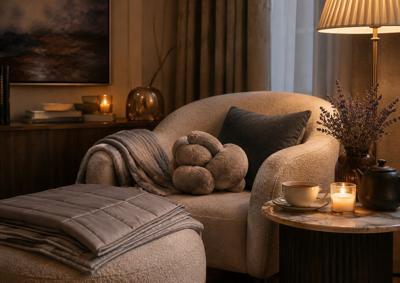

Mental Health Awareness Month is a good reminder that taking care of yourself does not always require a silent retreat, a $400 wellness gadget, or the ability to meditate without mentally reorganizing your entire closet.
Sometimes emotional wellbeing starts with smaller, gentler things: a softer evening routine, a weighted comforter, music in the shower, a calming scent, a warm cup of tea, softer lighting, or something comforting to hold when the day has been acting like it owns you.
The good news is that support does not have to feel clinical, complicated, or dramatic. It can be simple. It can be beautiful. It can sit on your bed, live in your bathroom, or wait quietly beside your favorite chair. That is why everyday comfort tools are having such a practical and much-needed moment.
Mental Health Awareness Month has been recognized every May in the U.S. to raise awareness about the role mental health plays in overall wellbeing, and the broader message is refreshingly human: people need support, resources, and realistic ways to care for themselves. For many people, that care begins with small rituals that make daily life feel less sharp around the edges.
For readers thinking more broadly about the connection between home and wellbeing, FINE has also explored how thoughtful living spaces support physical and mental balance, because the rooms we live in often shape more of our mood than we realize.
The Weighted Comforter That Makes Bed Feel Like a Boundary
There are few things more satisfying than getting into bed and deciding that the world is officially closed for business.
A weighted comforter can help make that moment feel more intentional. Unlike a standard throw blanket that gets dragged from couch to bed to chair like a household nomad, a weighted comforter is designed for the place where rest is supposed to happen: the bed.
The Eli & Elm Weighted Comforter is a strong fit for this kind of nightly comfort upgrade. Made with cotton sateen fabric and filled with glass beads and polyester, it offers the calming, hug-like feel people love from weighted blankets in a more polished comforter format.
That matters because the best everyday comfort tools are the ones people can actually use without turning their home into a wellness storage unit. A weighted comforter is not asking you to learn a new breathing technique, download another app, or journal your way through a crisis at 10:42 p.m. It simply adds a calming layer to the part of the day when most people need permission to shut down.
It is soft, useful, and beautifully practical, which is the sweet spot. Bedtime should feel less like collapsing from the day and more like intentionally shutting the world out.
Let the Shower Do More Than Rinse Off the Day
There is a reason people do some of their best thinking in the shower. It is one of the few places where nobody can reasonably expect you to answer an email, fold laundry, or explain why there are four open jars of mustard in the refrigerator.
Sound can make that small daily escape feel more restorative. The Mayo Clinic notes that music can be a stress reliever because it may provide mental distraction, reduce muscle tension, and help lower stress hormones. That does not mean every shower needs to become a full spa production, but it does mean sound can help signal the brain that the day is shifting.
For homeowners upgrading a primary bath, Kohler SoundTile Shower Speakers bring that idea into a more polished, permanent form. Designed as a low-profile shower audio upgrade and engineered with Harman Kardon, they make sound feel like part of the room rather than another gadget waiting on the counter.
In other words, this is not a little portable speaker balanced nervously on the vanity while everyone hopes steam and gravity behave. It is an elevated bathroom feature that turns the shower into something closer to a private reset room, which frankly sounds better than hiding in the bathroom pretending to “check one quick email.”
Among everyday comfort tools, shower sound has an underrated advantage: it attaches calm to something you already do. Add soft music, ocean sounds, a favorite playlist, or whatever makes your shoulders drop from your ears, and suddenly the daily rinse becomes a small reset ritual.
Scent Can Make a Room Feel Softer Before You Even Sit Down
There is a reason luxury hotels care so much about scent. Before anyone notices the thread count, the lighting, or the fact that the lobby flowers probably cost more than a small sofa, they notice how the room feels when they walk in.
At home, scent can work the same way on a smaller, more realistic scale. A clean, calming fragrance near the entry, beside the bed, or in the bathroom can help a room feel more finished and less like everyone simply survived the day and dropped their belongings wherever gravity allowed.
Auratherapy fits naturally here. A room spray, candle, oil, or discovery set gives the home a simple sensory reset, especially in the evening when the goal is to shift out of work mode and into something softer. It is not about making the house smell like a perfume counter. It is about creating a quieter mood with very little effort.
That is what makes scent one of the easiest everyday comfort tools to live with. You do not have to build a ritual around it, announce your intention to the room, or become the kind of person who says “sanctuary” too often. You just light the candle, mist the room, or add a little fragrance, and let the space do some of the calming for you.
Weighted Comfort, But Make It Softer
For comfort that feels a little more personal, Hugimals World brings weighted calm into a softer, more portable format.
A weighted plush may sound whimsical at first, until you remember that most adults are one stressful email away from needing to hold something soft and stare into the middle distance. Hugimals works as one of those everyday comfort tools that can sit nearby during anxious evenings, stressful transitions, travel, or quiet decompression time without making emotional wellbeing feel clinical or complicated.
This is where the product makes the most sense editorially: not as the whole story, and not as a miracle solution, but as part of a larger conversation about approachable comfort. Some people like a weighted blanket. Some people prefer a pillow. Some people want something portable that can sit on a lap, rest nearby, or provide a small grounding cue during moments when life feels too loud.
And honestly, there is something refreshing about a wellness tool that does not require charging, syncing, tracking, or pretending you understand your sleep data.
The Ritual of Something Warm
There is a reason tea has survived every wellness trend. Long before everyone was biohacking, optimizing, stacking supplements, and discussing cortisol on social media with suspicious confidence, people were boiling water and trying to feel better.
A calming evening drink can become one of the simplest everyday comfort tools because it creates a pause. The ritual matters: choosing the tea, heating the water, holding the cup, waiting a few minutes, and letting the day slow down without needing to announce that you are “practicing mindfulness.”
Something like Dona Tea Library could work beautifully here as a refined evening ritual. It feels thoughtful, giftable, and adult without trying too hard. Herbal, floral, or gently spiced blends can help create a nightly rhythm that feels more elegant than doom-scrolling under the covers and calling it rest.
The trick is to keep the ritual simple. A warm drink, a comfortable chair, softer lighting, and ten quiet minutes can do more for the nervous system than an overplanned self-care routine that requires a spreadsheet.
Soft Lighting Is Not Optional
Lighting might be the most underestimated comfort tool in the home.
A room with harsh overhead lighting at night can make even a beautiful space feel like a dentist’s office with throw pillows. Soft lighting, on the other hand, can make the same room feel calmer, warmer, and more human in seconds.
A dimmable lamp, a shaded sconce, a small table lamp, a candle, or warm-toned bulbs can help signal that the day is winding down. It is one of the easiest upgrades because it changes the emotional temperature of a room without requiring a renovation, a contractor, or three months of pretending you enjoy comparing grout samples.
As everyday comfort tools go, lighting is practical, affordable, and surprisingly powerful. It helps create the environment where the rest of the routine can actually work. For anyone refining a calmer home routine, this is also where design and wellbeing meet in a very real way.
Calm Does Not Have to Be Complicated
The best comfort tools are not the ones that make you feel like you are failing at wellness. They are the ones that meet you where you already are.
A weighted comforter can make bedtime feel more secure. Shower speakers can turn a daily rinse into a private reset. Scent can soften a room. Hugimals can offer portable weighted comfort. Tea can create a small ritual. Better lighting can make the house feel less frantic after dark.
None of these things replaces real mental health care when someone needs deeper support. For a more clinical look at treatment options, FINE has covered how TMS therapy works and benefits mental health daily. But not every act of care has to be dramatic. Sometimes the goal is simply to make the next hour gentler, the evening softer, or the bedroom feel like a place where the day is finally allowed to end.
Mental Health Awareness Month is a reminder that emotional wellbeing is not only found in big declarations. It is also found in the small, repeatable choices that help real life feel a little calmer.
And if one of those choices involves a weighted comforter, a beautiful shower playlist, and refusing to answer emails after 8 p.m., that sounds less like indulgence and more like common sense with better lighting.


(0) comments
We welcome your comments
Log In
Post a comment as Guest
Keep it Clean. Please avoid obscene, vulgar, lewd, racist or sexually-oriented language.
PLEASE TURN OFF YOUR CAPS LOCK.
Don't Threaten. Threats of harming another person will not be tolerated.
Be Truthful. Don't knowingly lie about anyone or anything.
Be Nice. No racism, sexism or any sort of -ism that is degrading to another person.
Be Proactive. Use the 'Report' link on each comment to let us know of abusive posts.
Share with Us. We'd love to hear eyewitness accounts, the history behind an article.